The first call after the fire goes out
The fire in the flue is out. The house smells of smoke, there are flakes of black char in the firebox, and someone heard a roar inside the wall that lasted a minute or two. The first thing most owners in Bell ask us is not about repair at all. It is this: can we use the fireplace again, and what will it cost to find out?
This page answers the second half with real numbers. The first half needs someone to look inside the flue, and that look is what the money buys.
One thing comes before any phone call: stop using the fireplace. Do not light a small test fire to see whether it still draws. A flue that has burned once often has cracked tiles or an open joint, and a second fire can push heat straight into the wood around it.
Two inspection prices, and which one a fire calls for
Stoddard Chimney Pros publishes two inspection prices:
| Visit | What it covers | Price |
|---|---|---|
| Walk-round look | Firebox, damper, cap and the outside of the stack, by eye | $57 |
| Post-fire camera visit | Flue recorded on camera, smoke chamber, attic passage, written findings | $405 |
The cheaper visit suits a chimney that is used each winter and has given no trouble. After a fire it is the wrong visit. Heat damage hides above the damper, in the tile joints and the smoke chamber, where an eye and a flashlight cannot reach.
The fire code standard for chimneys, NFPA 211, agrees. It sorts inspections into three depths and lists a chimney fire among the reasons to go to the middle one. That middle depth is our $405 visit. The camera travels the flue from the firebox or from the roof, the recording shows each joint, and we check the parts of the chimney that pass through the attic where they can be reached. The third depth means opening walls or masonry, and it is only called for when the camera points at something hidden behind them.
What the $405 visit puts in your hands
You are paying for a record, not only an opinion. When the visit is done you have:
- A written report naming each finding and where in the chimney it sits.
- Stills from the camera run, labelled so someone who was not there can follow them.
- A plain answer on burning: safe as it stands, safe after a sweep, or not safe until a named repair is done.
- A dated document that an adjuster, a buyer or a landlord can file.
That last item matters more after a fire than at any other time. An adjuster wants to know what was damaged and when. A dated report with photos answers both questions. There is more on that in the chimney report insurers want.
What decides the price of the repair
The inspection has a fixed price. The repair does not, because no two flue fires burn the same way. A short, hot one can glaze one section of tile and leave the rest sound. A long, smouldering one can crack every joint from the smoke shelf to the top. These are the things that move the repair figure:
- How far up the damage runs. Three cracked tiles near the bottom is a different job from a flue that needs a liner from end to end.
- What the flue is made of. Clay tile, an old unlined brick flue and a metal liner each have their own repair path.
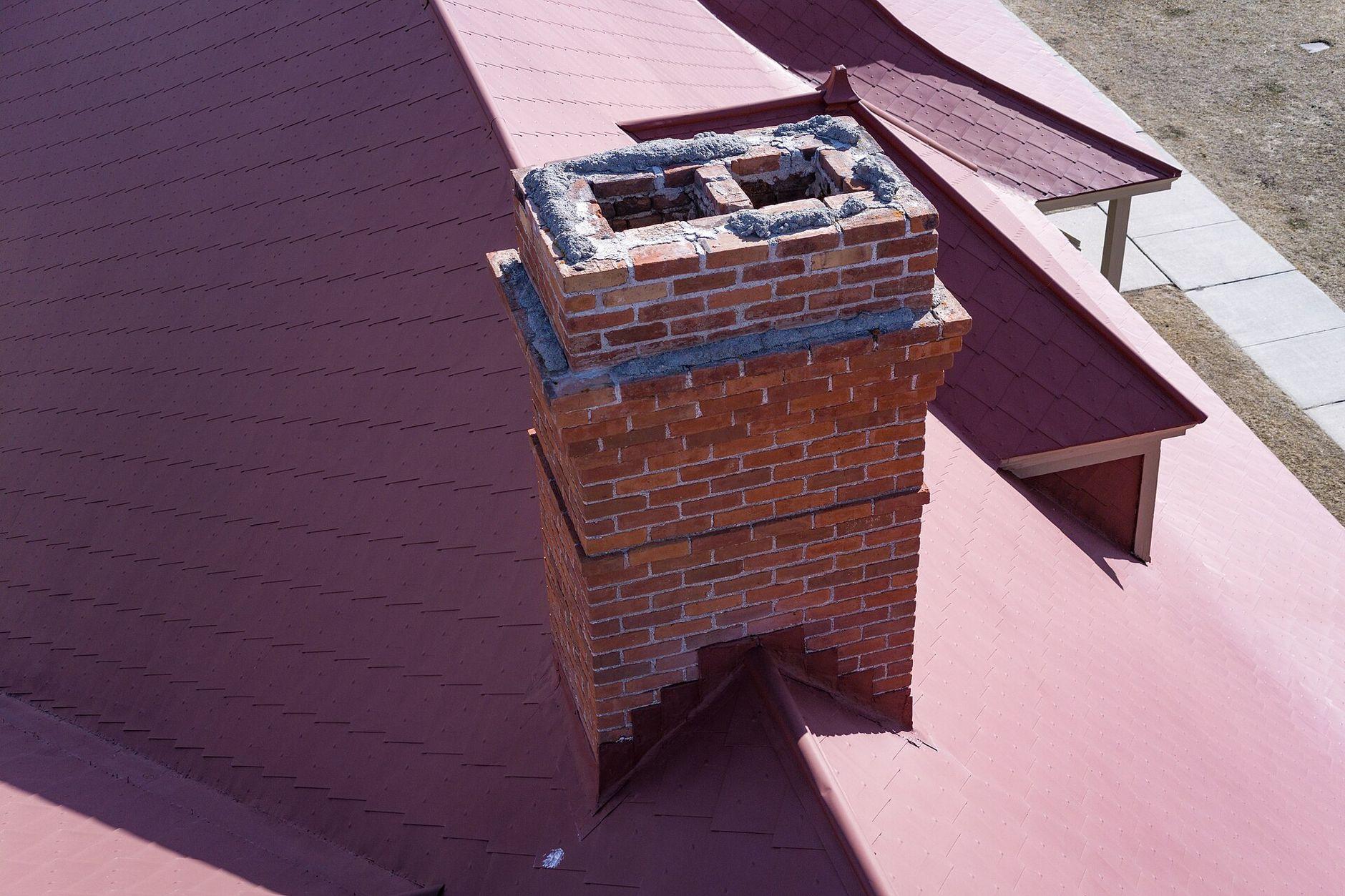
- What the heat reached outside the flue. Scorched framing in the attic, a warped damper plate or a split crown each add a line to the quote.
- Height and roof access. A two storey stack on a steep roof takes longer than a single storey one on a low pitch.
- Whether rain has got in since. Fire cracks let water in, and a wet chimney brings masonry work with it.
Some parts of a post-fire job do carry a set price here. A sweep to clear the burnt deposit starts from $435. If water has followed the fire into the brick, leak repair runs $580 to $3,450. A new cap with a spark screen is different: it is quoted on site. Size, metal and the number of flues set that price. A liner, a rebuilt smoke chamber, a damper or a crown is priced in writing once the camera has shown us the flue.
When you are ready for the camera visit, tell us what you saw and heard during the fire and give us the address. Describe what is in the firebox and how the top of the chimney looks from the street; we may ask for a photo when we call you back.
What comes after the report
Once the report is yours, the choices are plain and they are yours to make. In most houses they fall into one of three groups:
- Sweep and burn. The fire was small, the flue held, and a sweep removes the charred deposit. The report says so in writing.
- Repair the flue. Cracked tiles or an open joint mean a new liner before the next fire. Reline or rebuild after a fire sets out how that choice is weighed.
- Repair the structure. Heat has reached the brick, the crown or the wood around the chimney. This is a larger job, and it starts with a written scope from our chimney repair crew.
We do not start work on the day of the inspection unless you ask, and the repair is never folded into the inspection fee. You get the report, then a written quote, then the decision.
Why the camera is worth paying for
Some owners ask whether they can skip the inspection and order a liner straight away. You can, but without a camera run nobody knows whether the liner is the whole fix. A fire that cracked the tiles may also have opened a gap between the flue and the brick, or charred a joist where the chimney passes through the attic floor. The inspection is how you avoid paying for the wrong repair.
It is also how you find out you need less than you feared. Plenty of fires leave the flue sound. In that case the $405 buys a written all clear and a sweep, and the fireplace goes back into use with a document behind it.
Bell and the cities next to it
We work from Bell and cover Maywood, Lynwood, Pico Rivera and Los Angeles. Many houses here are older single storey homes with a brick chimney on an outside wall, and plenty of them still burn wood on cold nights when South Coast AQMD rules allow it. Those are the chimneys we see most often after a fire. The full Level 2 inspection page lists what the camera visit covers.
When the firebox is cold
Once the ashes have cooled and you want an answer you can file, reach us through the contact page and we will set up the camera visit and put every finding on paper.
Fireplace Off Until You Know?
Stoddard films the flue, checks the framing beside it and writes up what a fire left behind, with a plain answer on burning again. Visits cover Bell, Maywood, Lynwood, Pico Rivera, the city of Los Angeles and nearby cities.